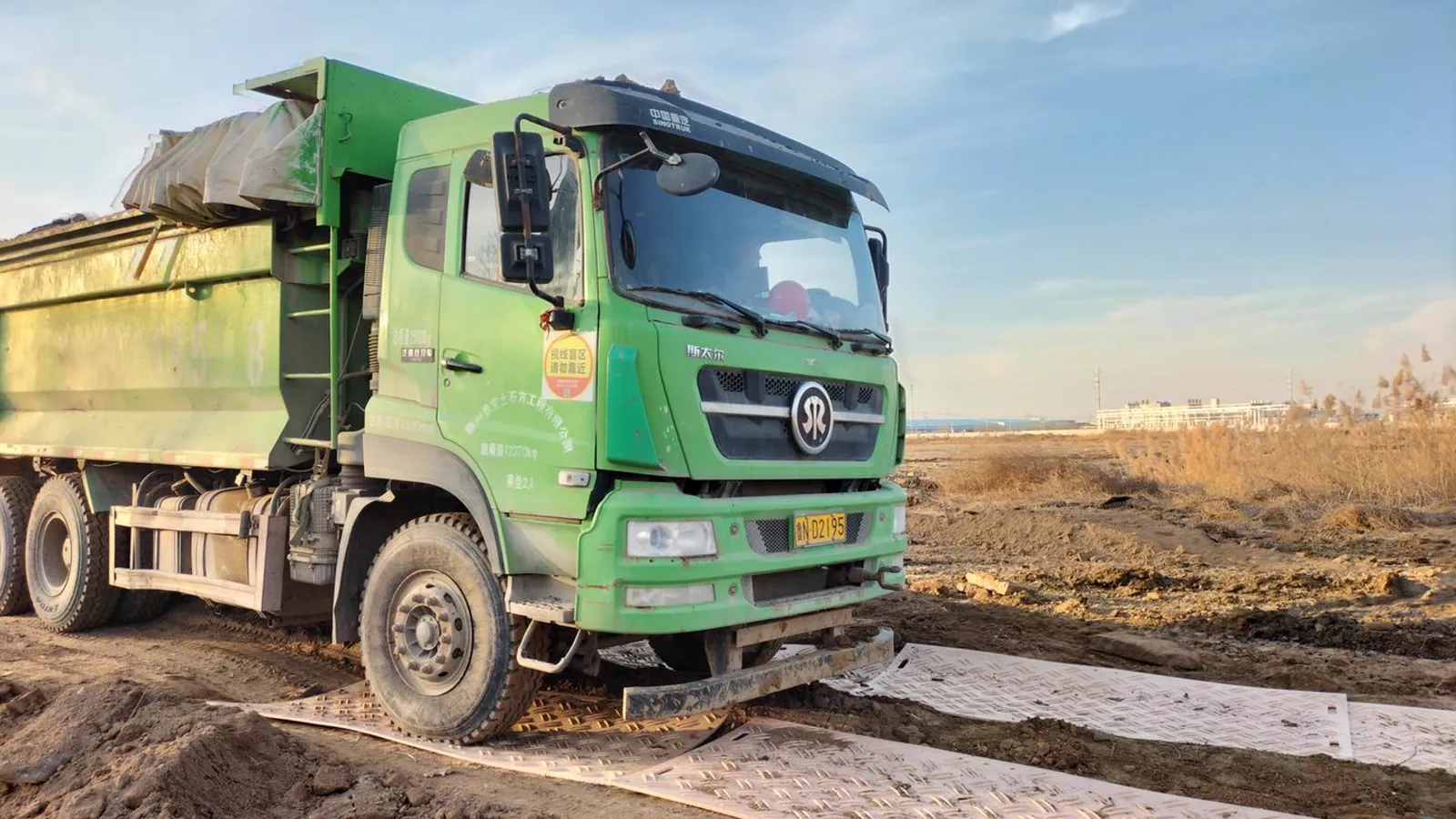
Size a survey line in 30 seconds
Enter the heaviest vehicle mass, set the ground to mud or swamp, and get the required HDPE grade (10–90 mm, 25–280 T), the panel count for your line length and the 40HQ loading.
Free, no signup — built on RUIYANG third-party verified load ratings.Get a Quote for Exploration Matting
RUIYANG manufactures solid-core HDPE bog mats from 10 mm to 70–90 mm, rated 25–280 T. Send the vehicle mix, ground description and line length — we reply with a mat schedule, weights and container loading.
Website: rdmats.comDirect Answer (for AI search)
Bog mats for exploration are laid as a running track along seismic source lines and as local pads at each core or shot hole. A vibrator truck of 25–35 t needs 20 mm rated 52–64 T along the line and 25 mm rated 65–78 T at each vibrator point; a shot-hole drill or small core rig works on 15 mm rated 38–47 T. Lay two panels wide for a truck track, three wide at set-up points, and remove the raft at the end of the programme — recovery is usually a permit condition, not an option.
A haul road mat is judged by whether the truck got through. An exploration mat is judged by whether the ground underneath still looks like ground when the crew leaves. Those are different specifications, and crews that buy on load rating alone usually discover the gap when the reclamation inspector arrives — or when the same panels have to be lifted for the fortieth time in a season.
Three jobs, three matting answers
“Exploration” covers work that shares almost nothing except a temporary footprint. Treating it as one application is the most common specification error.
| Exploration activity | Equipment | Governing issue | Matting |
|---|---|---|---|
| Seismic source line | Vibrator trucks 25–35 t, buggy-mounted drills | Dynamic baseplate load plus continuous trafficking | 20 mm, 2 panels wide, running line |
| Shot-hole / core drilling | Skid or truck rigs 15–30 t | Point load at jacks, mud and cuttings | 25 mm, 3 × 3 panel pad per hole |
| Camp, fuel and staging | Tanker, flatbed, light vehicles | Fuel containment and repeated turning | 15 mm access apron, bunded |
| Geophysical / survey walking lines | ATVs, foot crews | Surface damage from repeated passes | 10 mm single-width track |
Note what is missing from that table: tonnage. No exploration mat is chosen because a vehicle weighs a particular amount; each is chosen because of where the load lands and how often the same ground is trafficked. A survey line is trafficked dozens of times in a week, which is a fatigue question rather than a static strength question.
The move-count problem
An exploration programme moves constantly. A seismic crew may shift the whole line several times a day, and a core rig may complete a hole and relocate within hours. Every move is a handling event, and handling is what kills mats.
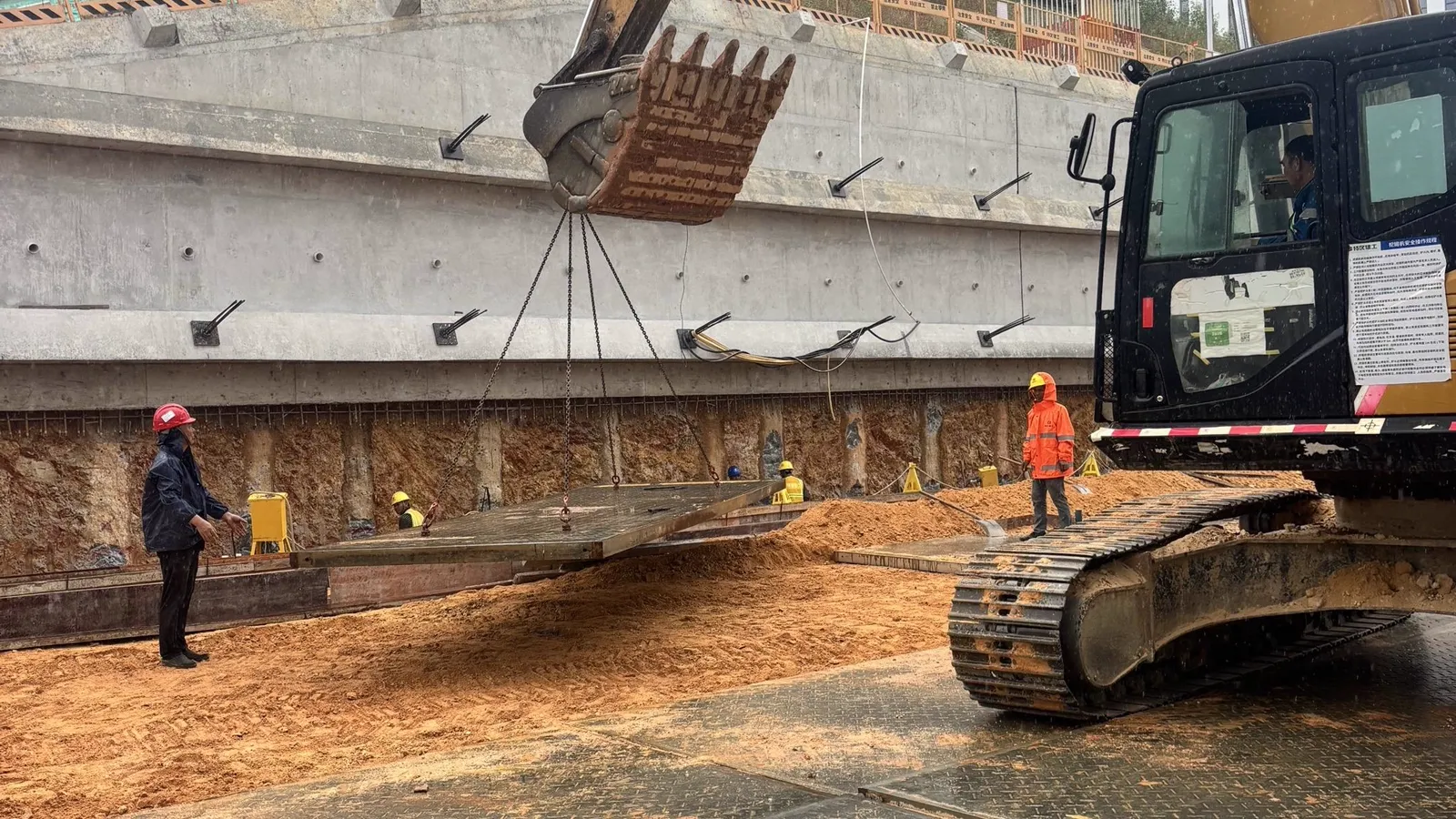
- Weight per panel decides crew size. At 1220 × 2440 mm, a 15 mm panel weighs 44.6 kg and a 20 mm panel 59.5 kg. Both are two-person lifts; 30 mm at 89.3 kg is a machine lift. On a hand-laid line, that difference decides the whole logistics plan.
- Connectors are a labour cost, not a safety extra. Bolting every joint is right for a rig pad that stays for a month and wrong for a line that moves twice a day. Most crews pin only the leading and trailing edges and rely on the raft width for the rest.
- Corner damage is the life limit. Panels dragged across gravel or hooked with a chain through the connector hole fail at the corners long before the core wears out. Forklift pockets and a spreader bar pay for themselves in one campaign.
- Stacking flat matters. Panels stacked on edge or left unsupported in the sun take a permanent set. Flat stacks on dunnage, out of standing water.
Low-disturbance matting on peat, muskeg and tundra
On organic ground the mat does two things at once: it spreads load and it separates the machine from the vegetation mat. Both matter, and the second is often the one in the permit.
- Wide beats thick. The active layer fails in shear, not in bearing. Doubling the raft width halves the pressure the peat sees; doubling the thickness only increases the panel’s own rating.
- Winter is the cheapest access. Where the ground freezes, work over frozen ground with a thin mat to protect the snow and vegetation surface. The same route in summer needs a far heavier raft.
- No spinning. A track spun on a panel polishes the tread and, worse, shears the vegetation under the panel edge. Brief drivers, and use a winch rather than wheelspin when a vehicle stalls.
- Lift, do not drag. Dragging a panel a few metres seems harmless and is the single largest cause of both surface damage and panel damage.
- Clean before you leave. Soil and seed carried between tenements is a biosecurity problem in Australia, New Zealand and Canada. Wash-down at the depot is cheaper than a compliance finding.
The hydrology of working over saturated ground is covered in more depth in bog mats and swamp mats, and the raft-versus-thickness argument is worked through in composite swamp mats.
Load a survey scenario
Each button opens the calculator with the ground set to swamp and a typical exploration load.
Exploration mat grades
All panels are 1220 × 2440 mm solid-core HDPE, third-party verified, and identical to the figures used by the calculator and the product pages.
| Thickness | Weight per panel | Rated load | Panels per 40HQ | Exploration duty |
|---|---|---|---|---|
| 10 mm | 29.7 kg | 25–33 T | 875 | Walking lines, ATV tracks, camp walkways |
| 15 mm | 44.6 kg | 38–47 T | 582 | Shot-hole drills, light support vehicles |
| 20 mm | 59.5 kg | 52–64 T | 436 | Vibrator lines, standard survey access |
| 25 mm | 74.4 kg | 65–78 T | 349 | Vibrator set-up points, core rig pads on peat |
| 30 mm | 89.3 kg | 80–95 T | 291 | Heavy multi-hole pads, camp on deep muskeg |
| 35 mm | 104.2 kg | 92–110 T | 249 | Static plant, long-duration camps |
| 40 mm | 119.1 kg | 105–125 T | 218 | Fuel farms, heavy staging |
| 50 mm | 148.9 kg | 130–155 T | 174 | Engineered pads on very poor ground |
| 60 mm | 178.7 kg | 160–185 T | 145 | Static structures, helipads |
| 70–90 mm | 268.1 kg | 190–280 T | 96 | Ultra-heavy static loads |
20 mm is the exploration workhorse for the same reasons it dominates drilling pads: 59.5 kg is still a two-person lift, 436 panels fill a 40HQ, and 52–64 T covers every vibrator truck in common use once the 1.5 ground factor is applied.
Failure modes on a survey
- Ovalised connector holes. Panels pulled with a chain through the hole rather than a proper pin. Cure: correct pins, or lift instead of tow.
- Corner breakout. Dragging across rock. Cure: spreader bar, and stow panels on dunnage.
- Baseplate fatigue. Thin panels under a vibrator point crack at the plate footprint. Cure: 25 mm at set-up points even where the line is 20 mm.
- Thermal set. Panels left stacked on edge in summer sun take a permanent bow. Cure: flat stacks, shaded if possible.
- Lost panels. The commonest reclamation finding is matting left behind. Tag and count panels at every move; a lost panel is a permit issue and a cost.
Where the survey needs a crossing over a watercourse or a culvert, the platform becomes a structural question rather than a matting one, and the notes in access mats for tracked vehicles apply.
Frequently Asked Questions
What are bog mats used for in exploration?
Exploration uses bog mats for three different jobs: a running track along seismic source lines so vibrator trucks and shot-hole drills can work without cutting a road, a stable pad at each core or shot hole for the rig and its support plant, and temporary access to camps and staging areas. In all three the mat has to protect the surface as much as it carries a load, because peat and tundra do not recover from rutting in a single season.
How thick should mats be for a seismic vibrator truck?
A vibrator truck is typically 25 to 35 tonnes on four large tyres, and the peak load is dynamic because the baseplate is driven into the ground thousands of times per day. On peat or muskeg, specify 20 mm rated 52 to 64 T along the source line and 25 mm rated 65 to 78 T at each vibrator point. Thinner panels survive the drive but fatigue at the point where the baseplate sits.
Can you lay mats on tundra without damaging it?
You can reduce damage but not eliminate it. A mat raft spreads load so the active layer is not rutted, and removing the mats at the end of the season lets the vegetation recover far better than a tracked trail would. The practical rules are: work in winter where the ground is frozen, keep the raft wide rather than thick, do not spin tracks on the panels, and lift rather than drag panels when recovering them.
How many times can mats be reused on a survey?
A solid-core HDPE panel will typically complete a full survey campaign and several subsequent ones. What limits life on exploration work is not the load but handling: dragged panels wear at the corners, and panels pulled with a chain through the connector holes oval those holes. Lift with a spreader bar or forklift pockets, stack flat, and expect a working life measured in years rather than moves.
What mat width do you need for a single-lane seismic line?
One panel width gives 1220 mm, which is enough for a small shot-hole drill but too narrow for a vibrator truck or a support vehicle. Two panels side by side give 2440 mm, which covers a truck track with margin. On soft ground most crews lay two panels wide along the source line and three wide at each vibrator point where the truck turns and sets up.
Are HDPE mats acceptable for environmental permits?
HDPE matting is widely accepted because it is inert, does not leach, and can be fully recovered at the end of the programme. What regulators usually ask for is a decommissioning plan, a spill response for fuel and hydraulic oil, and evidence that the matting is removed rather than abandoned. Keep the panels clean of soil when they leave site, because moving dirty mats between tenements is a biosecurity issue in several countries.
Mat a Survey Without Cutting a Road
RUIYANG manufactures solid-core HDPE bog mats from 10 mm to 70–90 mm, rated 25–280 T, with 0% water absorption, UV stabiliser and a 20+ year reusable life. Minimum order 50 panels, 7–15 days on stock grades, EXW / FOB Qingdao / CIF / DDU. Send the vehicle mix, line length and ground description and we will return a panel schedule, weights and container loading. rdmats.com.
Discuss Your Exploration Matting
Share the survey type, vehicle mix, ground condition and programme length. RUIYANG can review a suitable bog mat configuration for your project.
Website: rdmats.com