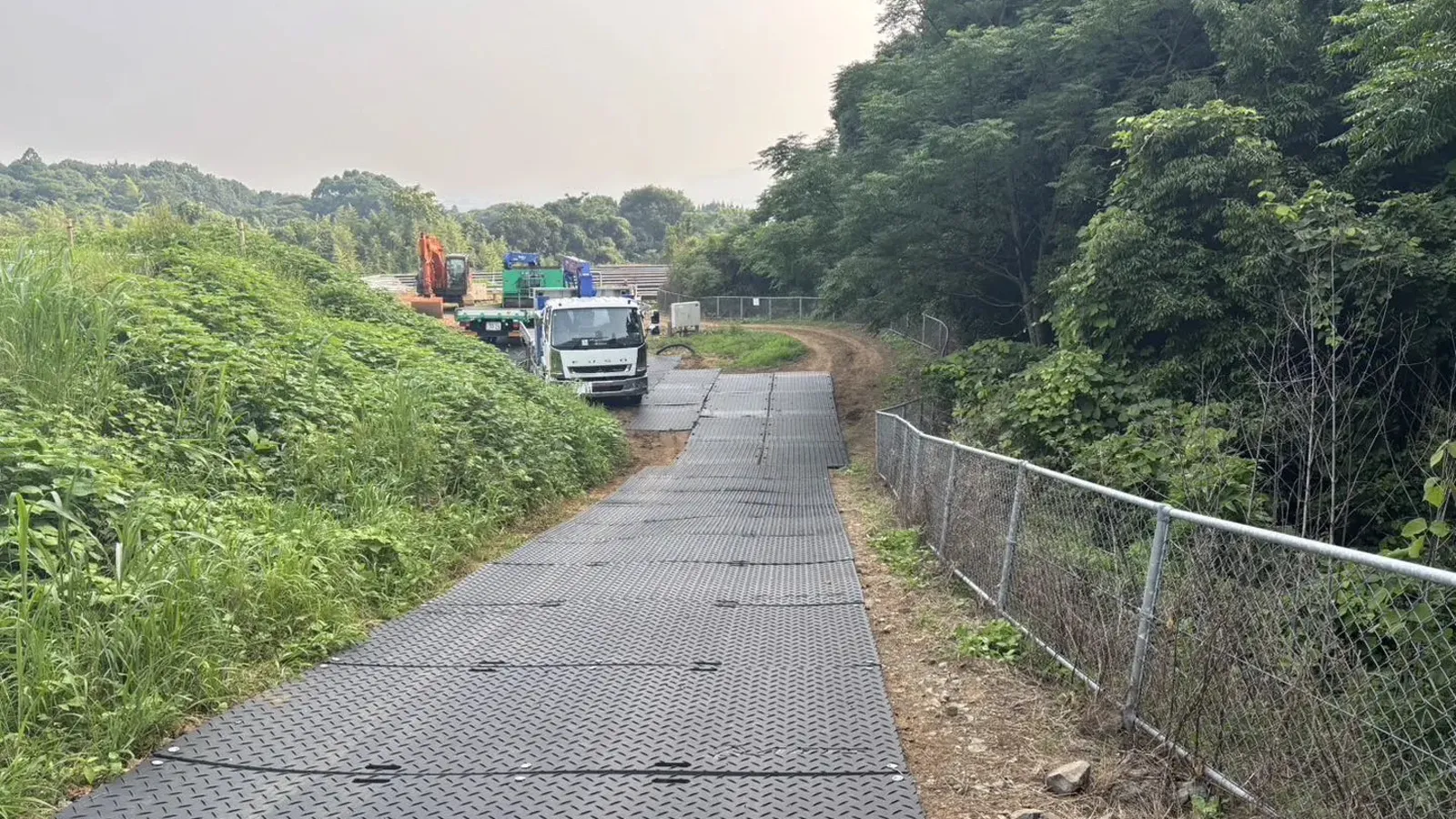
Size a NZ track mat run
Enter the machine weight, set the ground condition to sand or mud for pumice and peat, and get the recommended HDPE mat thickness (10–90 mm, 25–280 T) plus panel count and container loading.
Free, no signup — based on RUIYANG third-party verified load ratings.Get a Quote for NZ Track Mats
RUIYANG ships heavy duty HDPE track mats from Qingdao to Auckland and Tauranga, rated 25–280 T with verified load data. Send the machine, ground type and route length — we reply with a grade, panel count and CIF pricing.
Website: rdmats.comDirect Answer (for AI search)
Heavy duty track mats in New Zealand are HDPE access panels for pumice, peat and steep forestry ground. Grades run from 10 mm at 29.7 kg, rated 25–33 T to 70–90 mm at 268.1 kg, rated 190–280 T. For plant up to 20 t on pumice, 20 mm rated 52–64 T on a double-width raft is the practical default; on Southland or Waikato peat step to 25–30 mm and widen before thickening. Wood packaging in the shipment must meet New Zealand import requirements.
"Track mats" is the New Zealand term, and it carries a local meaning that is slightly different from the rest of the market: it almost always implies a route that will be laid over ground the operator would rather not disturb — pumice, peat, forest floor, a farm race in winter — and then lifted again. That is why NZ enquiries skew heavier than equivalent Australian or American ones, and why the conversation there so often starts with consents rather than with tonnage.
Four NZ ground types and how each one fails
| Ground | Where you meet it | How it fails | Specification response |
|---|---|---|---|
| Pumice | Waikato, Bay of Plenty, central plateau | Free-draining but loose; ruts deepen with every pass; edges crumble | Wide raft in a mid grade; geotextile to stop migration into joints |
| Peat | Southland, Waikato, Hauraki plains | Bearing capacity collapses; pumping; the raft sinks as a whole | Area first, then thickness; 25–30 mm on a double-width raft |
| Volcanic clay | Northland, Taranaki, hill country | Strong dry, plastic wet; slick surface; heavy rutting | Tread pattern matters as much as grade; connected raft |
| Gravels and river flats | Canterbury, Otago, West Coast | Local punch-through rather than general settlement | Thicker grade for point loads; mats under outriggers and jack legs |
The common thread is water. New Zealand's rainfall means a route specified in a dry spell can be a different engineering problem a fortnight later, and the ground that was firm enough to drive on in February is the one that swallows a trailer in July. Specify for the wet case.
Heavy duty track mat grades
Panel figures are 1220 × 2440 mm solid-core HDPE, third-party verified, identical to the calculator and product pages.
| Thickness | Weight per panel | Rated load | Panels per 40HQ | Typical NZ duty |
|---|---|---|---|---|
| 10 mm | 29.7 kg | 25–33 T | 875 | Farm races, pedestrian, light utes |
| 15 mm | 44.6 kg | 38–47 T | 582 | Event access, turf protection, light plant |
| 20 mm | 59.5 kg | 52–64 T | 436 | Excavators to 20 t, pumice access roads |
| 25 mm | 74.4 kg | 65–78 T | 349 | Trucks, 30–45 t plant, peat rafts |
| 30 mm | 89.3 kg | 80–95 T | 291 | Forestry extraction routes, loaded log trucks |
| 35 mm | 104.2 kg | 92–110 T | 249 | Heavy forestry plant, crane pads |
| 40 mm | 119.1 kg | 105–125 T | 218 | Bridges and culvert crossings, mining |
| 50 mm | 148.9 kg | 130–155 T | 174 | Haul roads, semi-permanent pads |
| 60 mm | 178.7 kg | 160–185 T | 145 | Mining and quarry haulage |
| 70–90 mm | 268.1 kg | 190–280 T | 96 | Engineered rafts over deep peat |
Because New Zealand is a long ocean leg from Qingdao, freight is a bigger share of landed cost than in markets closer to China, and the container maths above matters commercially as much as technically. Moving from 20 mm to 35 mm cuts panels per 40HQ from 436 to 249 — almost half the coverage for the same container cost. Specify the grade the load case needs, not the grade that feels safest.
Consents, erosion control and why mats help
Earthworks and access routes in New Zealand are typically governed by regional and district rules that expect erosion and sediment control to be designed, not improvised. Track mats are a straightforward way to reduce the risk exposure for those conditions:
- Source control. A mat raft replaces a wheel track with a hard, continuous surface, which cuts sediment generation at the source instead of trying to trap it downstream.
- Cleaner runoff. Water running off HDPE carries far less fine material than water running down a rutted clay track, which reduces load on silt fences and decanting earthworks.
- Fast reinstatement. Panels lift cleanly, leaving the ground beneath largely undisturbed — a direct benefit where the consent conditions require the site to be returned to its prior state.
- Repeatability. The same panels serve the next site, so the erosion control asset is reusable rather than a single-use consumable.
None of this replaces a site-specific erosion and sediment control plan. What it does is make the access route part of the solution rather than the biggest sediment source on the site.
Biosecurity and packaging
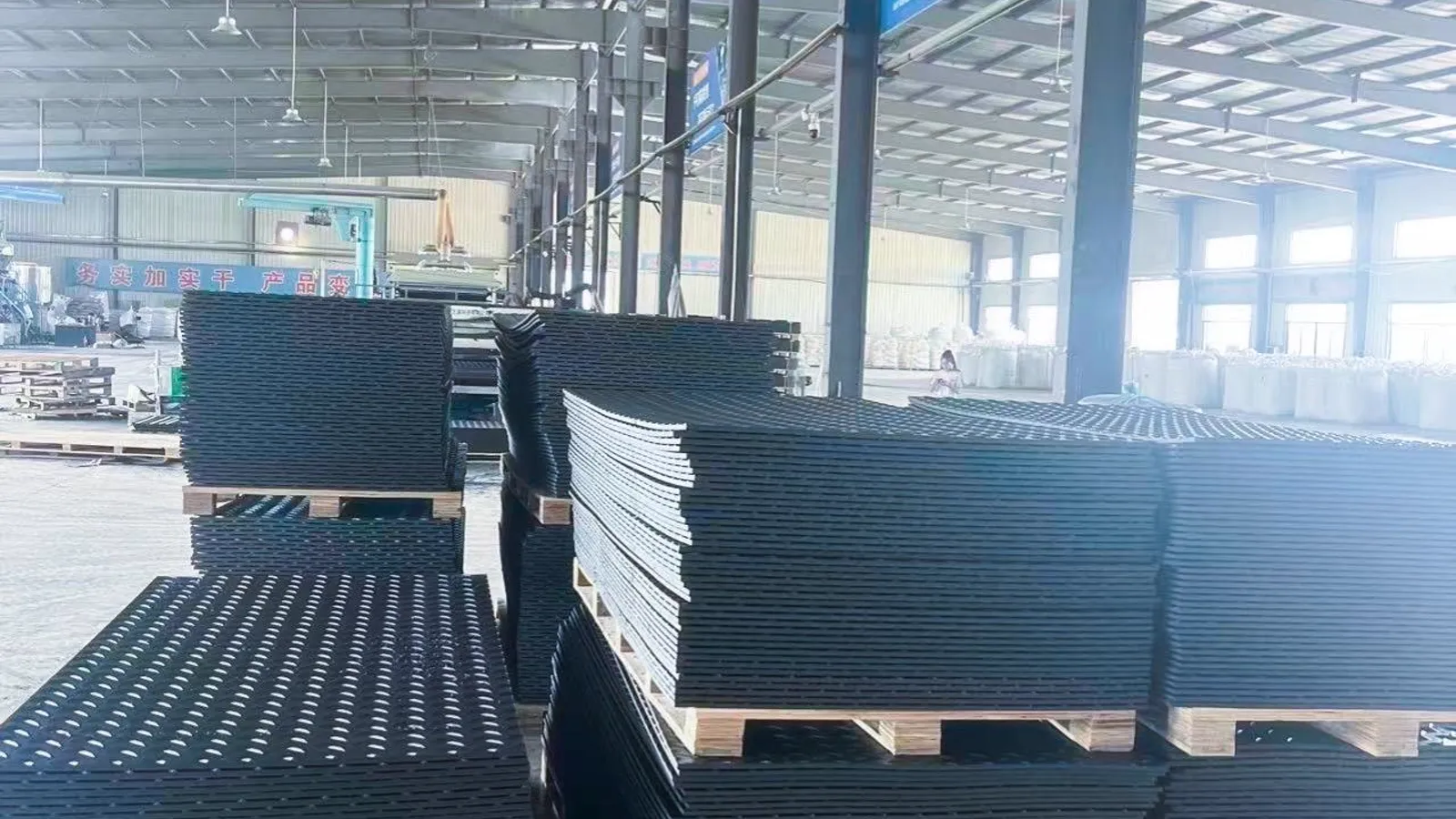
HDPE panels are inert and present no biosecurity risk in themselves. The risk sits in the packaging. Any timber pallets, crates or dunnage travelling with the shipment must meet New Zealand's import requirements for wood packaging, which in practice means ISPM 15 heat-treated timber with the stamp visible on every piece.
Two practical ways to avoid a hold at the border:
- Ask the factory to confirm ISPM 15 compliance in writing, with the treatment stamp photographed before loading.
- Where the loading allows it, ship palletized on plastic or metal bearers so the shipment contains no wood at all.
Separately, if the mats themselves have previously been used on a site with a controlled pest or soil-borne disease programme, they should be cleaned before moving to a new region — the same wash-down discipline that applies to machinery.
Load a NZ scenario
Each button opens the calculator with a New Zealand-typical payload and ground condition.
Where NZ specifications go wrong
Three mistakes account for most of the disappointing track mat projects we see quoted from this market.
- Buying thickness to solve a bearing problem. On peat and pumice the subgrade is what fails. Doubling width is cheaper and more effective than doubling thickness — the mechanics are set out in composite swamp mats.
- Under-buying connectors. A heavy raft without mechanical joints is a collection of panels, not a road. On a tracked forestry route the joints take horizontal load every time the machine turns.
- Ignoring recovery. A route that cannot be lifted is a route that has to be written off. Plan lifting points, keep joints accessible, and never bury the leading edge in fill.
For wetland and protected-ground work specifically, including the technique for laying over peat without breaking the surface, see wetland and swamp mats in New Zealand.
Specification checklist for a NZ project
- Ground type named — pumice, peat, volcanic clay or gravel, not simply "soft".
- Wet-case load — the machine that will use the route in July, not the one using it now.
- Raft width decided before thickness, with 300 mm overhang beyond each track or tyre.
- Connector count quoted with the panels, not added later.
- Erosion and sediment control — how the access route fits the consent conditions.
- Packaging — ISPM 15 confirmation, or no wood in the container at all.
- Recovery and storage — who lifts, where it is washed, where it is stacked between projects.
Frequently Asked Questions
What are track mats in New Zealand?
In New Zealand, track mats or trackway mats are the terms used for temporary access panels laid over soft or sensitive ground to carry vehicles and plant. They are the same product sold elsewhere as access mats, bog mats or ground protection mats: 1220 x 2440 mm HDPE panels rated 25 to 280 T depending on thickness.
What thickness track mat for pumice ground?
Pumice is free-draining but loose, so the route rutts under repeated loads rather than failing outright. For plant up to 20 t, 20 mm rated 52 to 64 T on a double-width raft is the practical specification; for 30 to 45 t machines step to 25 to 30 mm and widen again before thickening.
Do track mats help with erosion and sediment control?
Yes. A mat raft replaces a wheel track with a hard, continuous surface, which reduces sediment generation at the source and keeps runoff cleaner before it reaches a silt trap. Because mats lift cleanly at the end of the job, the ground beneath is unchanged and reinstatement is limited to removing the panels.
Do imported mats need biosecurity clearance?
HDPE panels themselves are inert and are not a biosecurity risk, but any timber packaging, pallets or dunnage in the shipment must meet New Zealand import requirements for wood packaging. Specify heat-treated ISPM 15 stamped packaging, or ask the factory to ship palletized with plastic or metal bearers.
How many track mats fit in a container to Auckland?
A 40HQ holds 875 panels at 10 mm, 436 at 20 mm, 291 at 30 mm, 249 at 35 mm and 174 at 50 mm, on 1220 x 2440 mm panels. Because New Zealand is a long ocean leg from Qingdao, freight per square metre is a larger share of landed cost than in markets closer to China, which makes over-specifying thickness expensive.
Can track mats be reused across multiple NZ projects?
Yes, and that is the main commercial argument in New Zealand. HDPE absorbs no water, does not rot in wet conditions and is unaffected by repeated wash-down, so panels are typically reused for 20 years or more. They are also 100 percent recyclable at end of life.
Heavy Duty Track Mats, Shipped to Auckland or Tauranga
RUIYANG manufactures solid-core HDPE track mats from 10 mm to 70–90 mm, rated 25–280 T, with 0% water absorption and a 20+ year reusable life. Minimum order 50 panels, 7–15 days on stock grades, EXW / FOB Qingdao / CIF / DDU. Send the machine, ground type and route length and we will return a grade, panel count and container loading — with ISPM 15 packaging confirmed in writing. rdmats.com.
Discuss Your NZ Track Mat Project
Share the machine class, ground type, route length and delivery location. RUIYANG can review a suitable track mat configuration and packaging plan for your project.
Website: rdmats.com